
 LAB 01Free lab
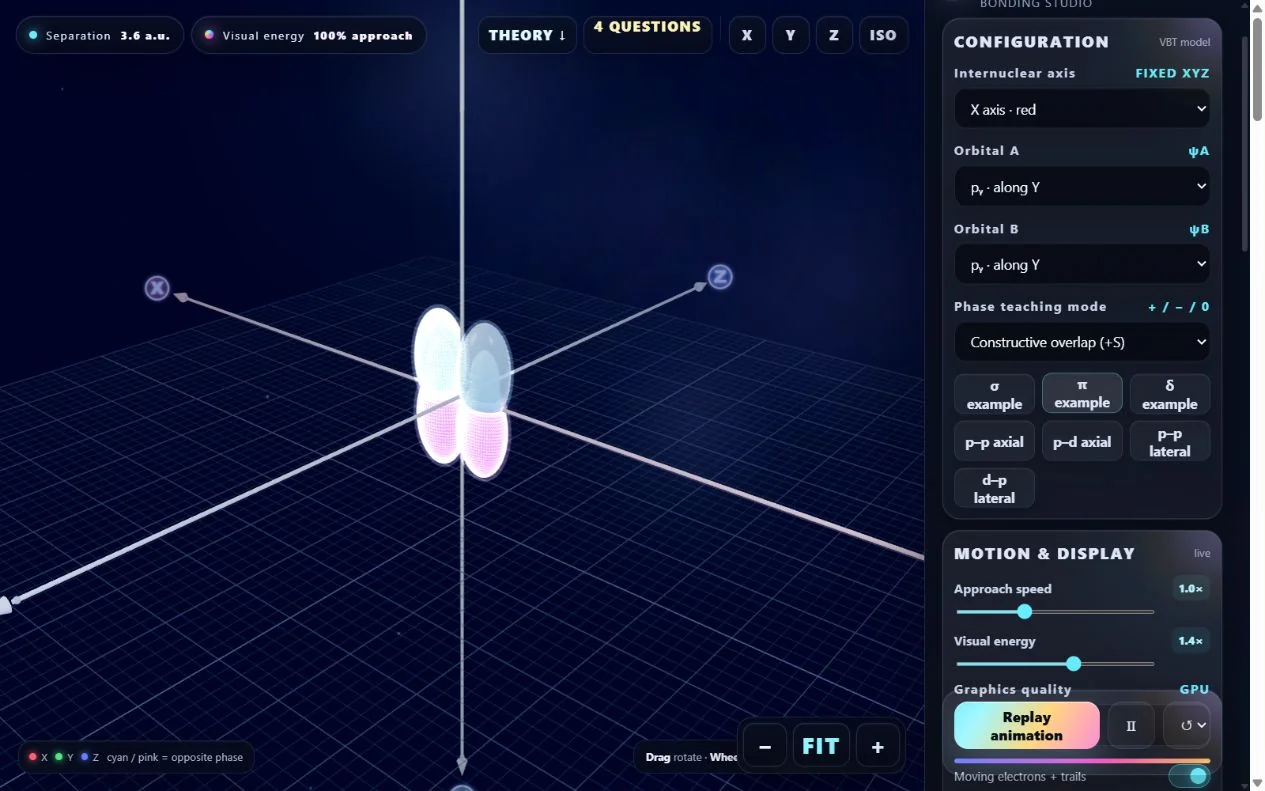
VBT overlapping
Choose two s, p or d orbitals and an internuclear axis, then test whether their symmetry and phase produce σ, π, δ, mixed or no overlap.
SIMULATION LIBRARY
Explore 21 interactive simulations. Find a concept, change a variable and see the chemistry for yourself. Our current collection focuses mainly on bonding, periodic trends and physical chemistry; organic chemistry coverage is still growing.
See how Chemistry JAM supports concept-led chemistry study worldwide →
VBT · Orbital overlappingRotate, compare and discover how bonds form.Open VBT lab ↗START HERE · FREE FOUNDATION LAB
Begin with Fajan’s Rule: compare ion size, charge and polarisation before exploring more advanced orbital models.
Open Fajan’s Rule free →Lab numbers are permanent identifiers, so retired slots are not reused. The Periodic Basic Quiz is a practice activity in My Learning, separate from this simulation catalog.
21 matching simulations
LAB 01Free labChoose two s, p or d orbitals and an internuclear axis, then test whether their symmetry and phase produce σ, π, δ, mixed or no overlap.
 LAB 02Interactive lab
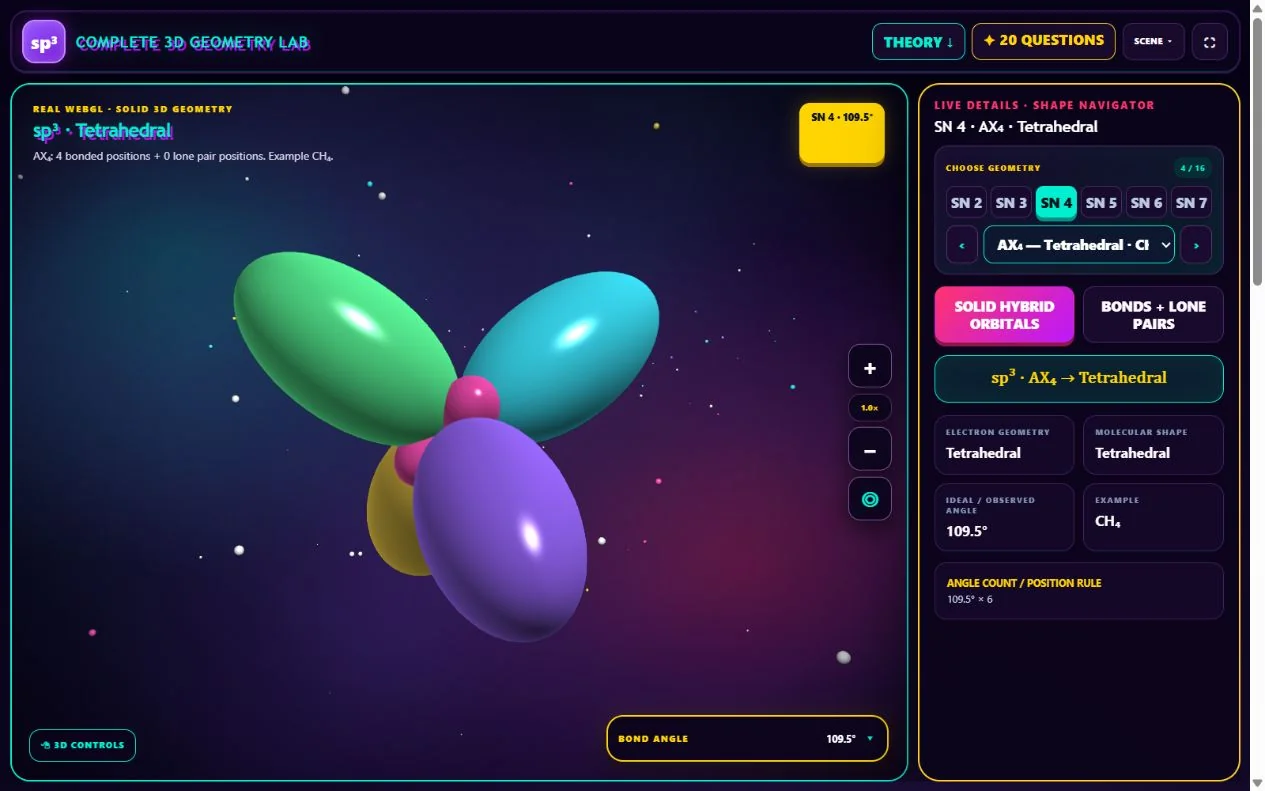
Explore solid hybrid orbitals and complete VSEPR geometries from steric number 2 to 7, then practise 50 foundation, core and advanced questions.
 LAB 03Interactive lab
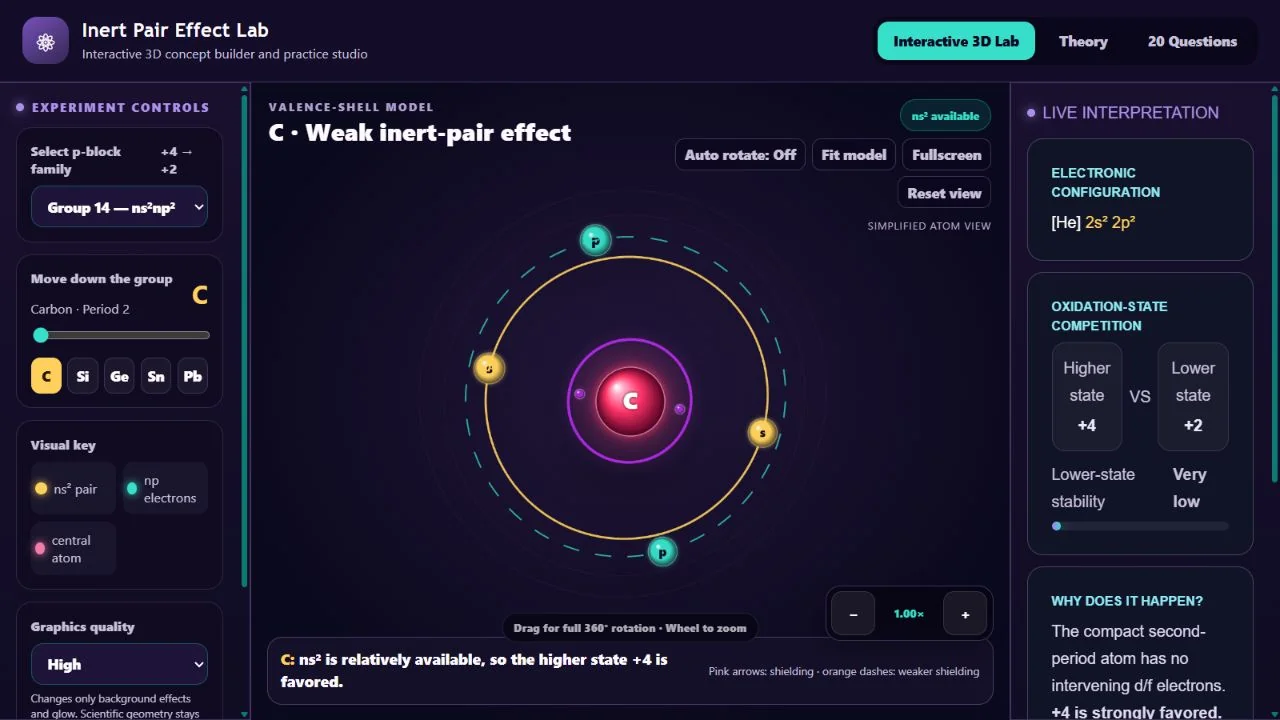
Visualise why the ns² electron pair participates less down Groups 13–15, compare lower and higher oxidation states, and solve guided practice questions.
 LAB 04Free lab
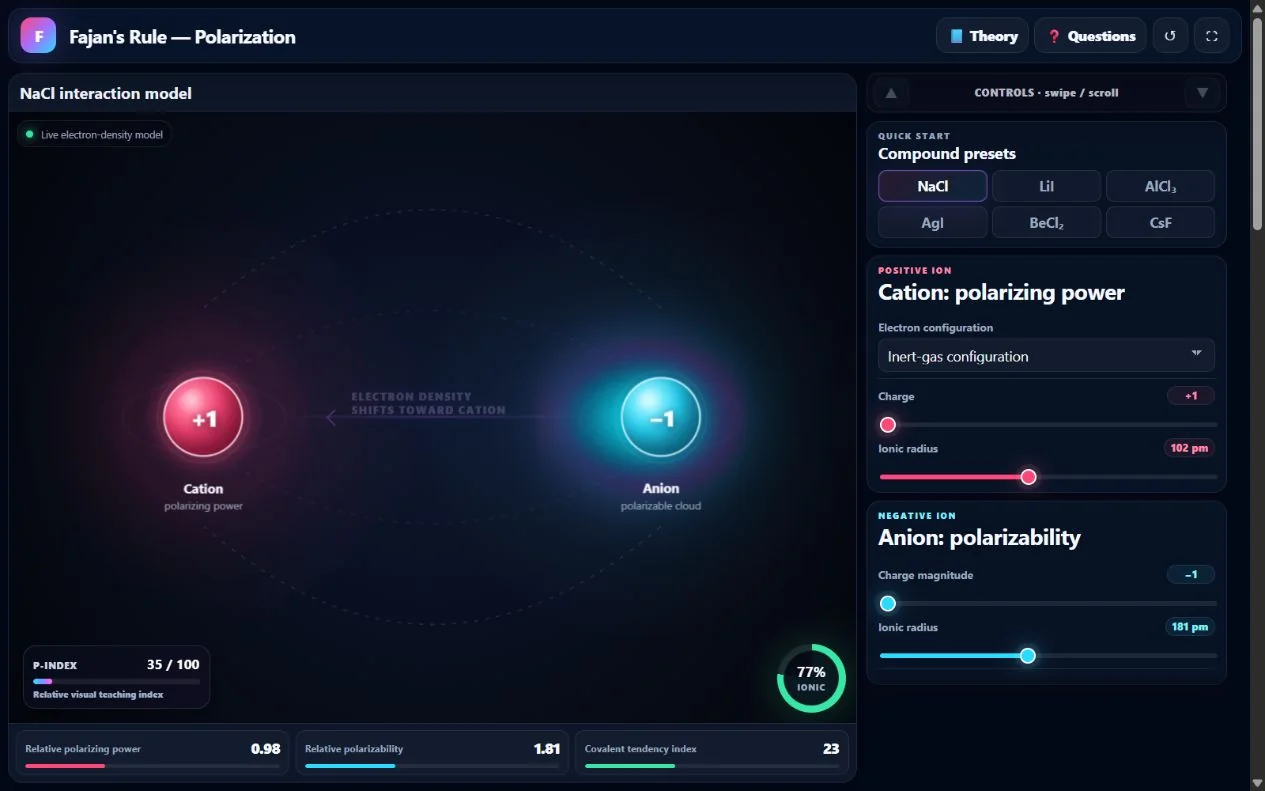
Keep ion centres fixed while charge, radius, shielding and electronic configuration reshape the anion cloud, then compare compounds and test Fajan's rule.
 LAB 05Free lab
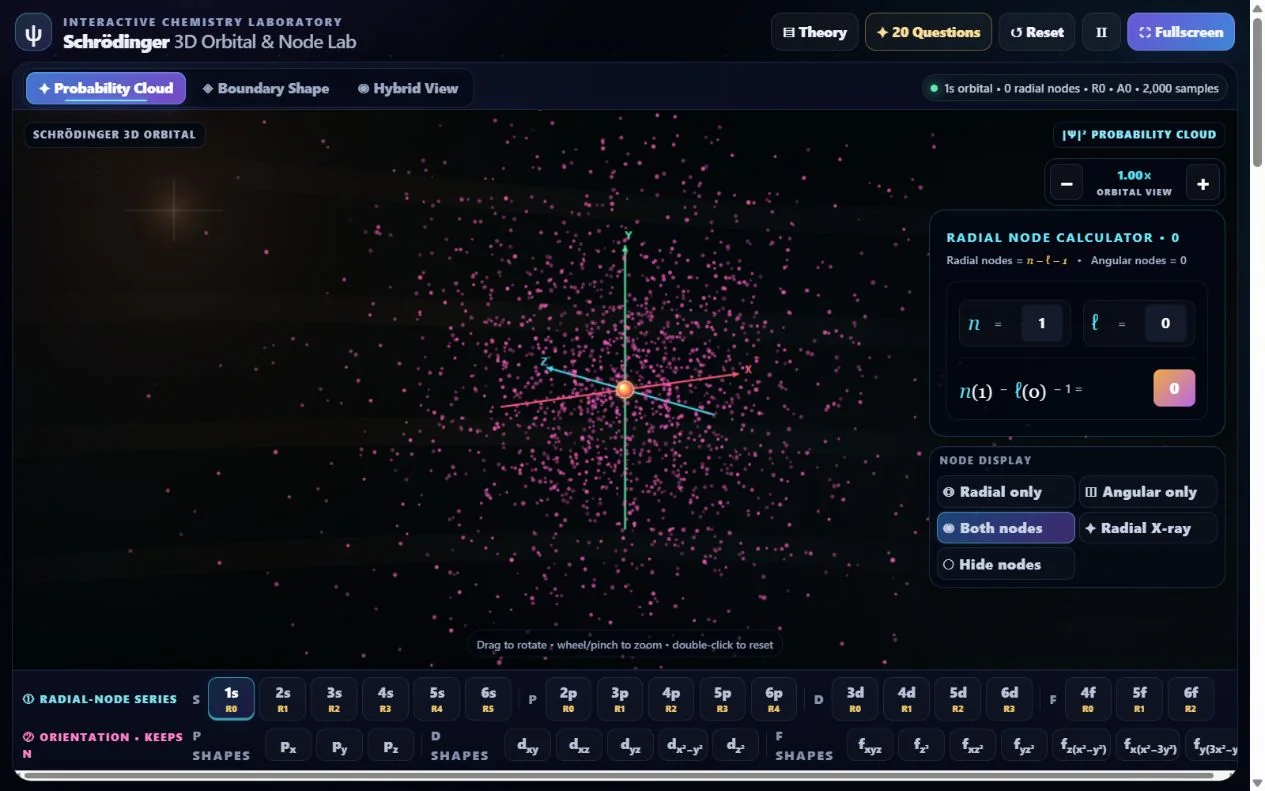
Explore probability clouds, boundary shapes and radial/angular nodes across s, p, d and f orbitals in a rotatable 3D space.
 LAB 07Interactive lab
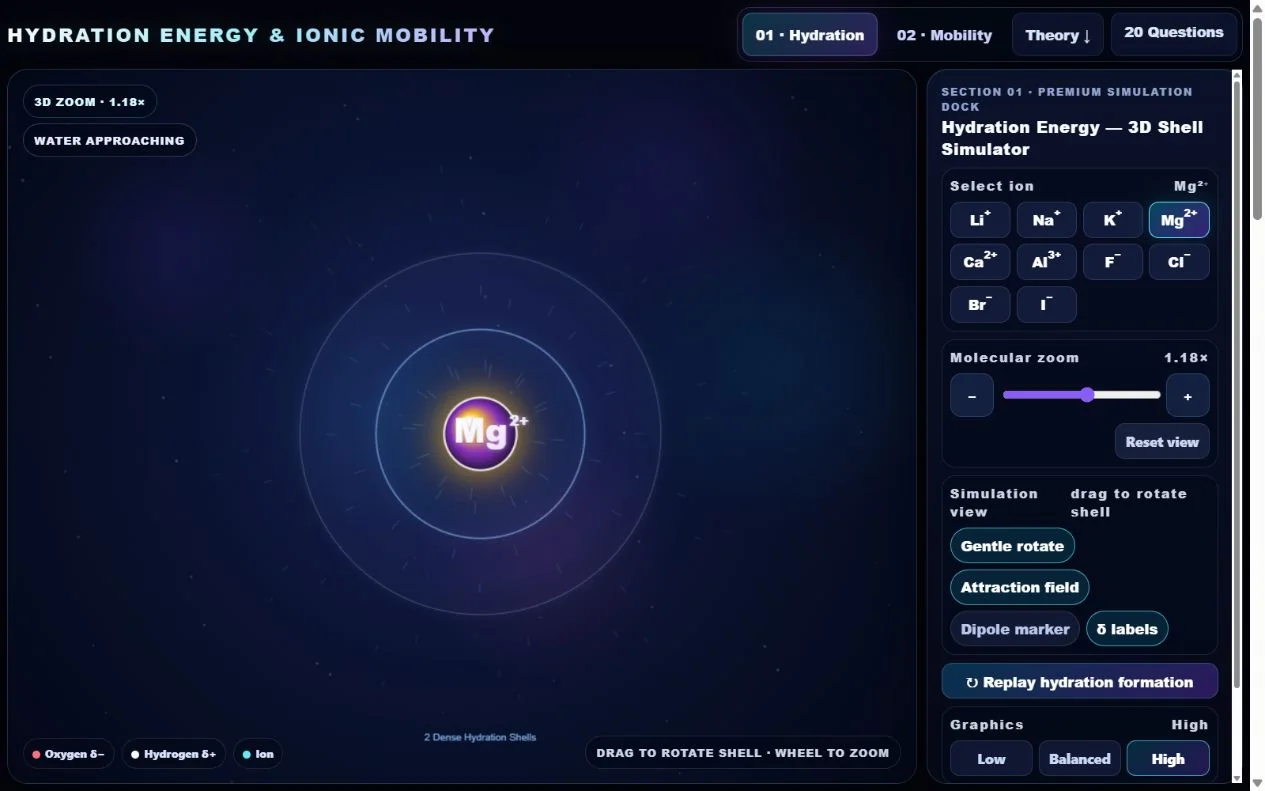
Watch water dipoles approach, orient and lock around an ion in a rotatable 3D hydration shell, then compare realistic hydrated-ion motion in an electric field.
 LAB 08Interactive lab
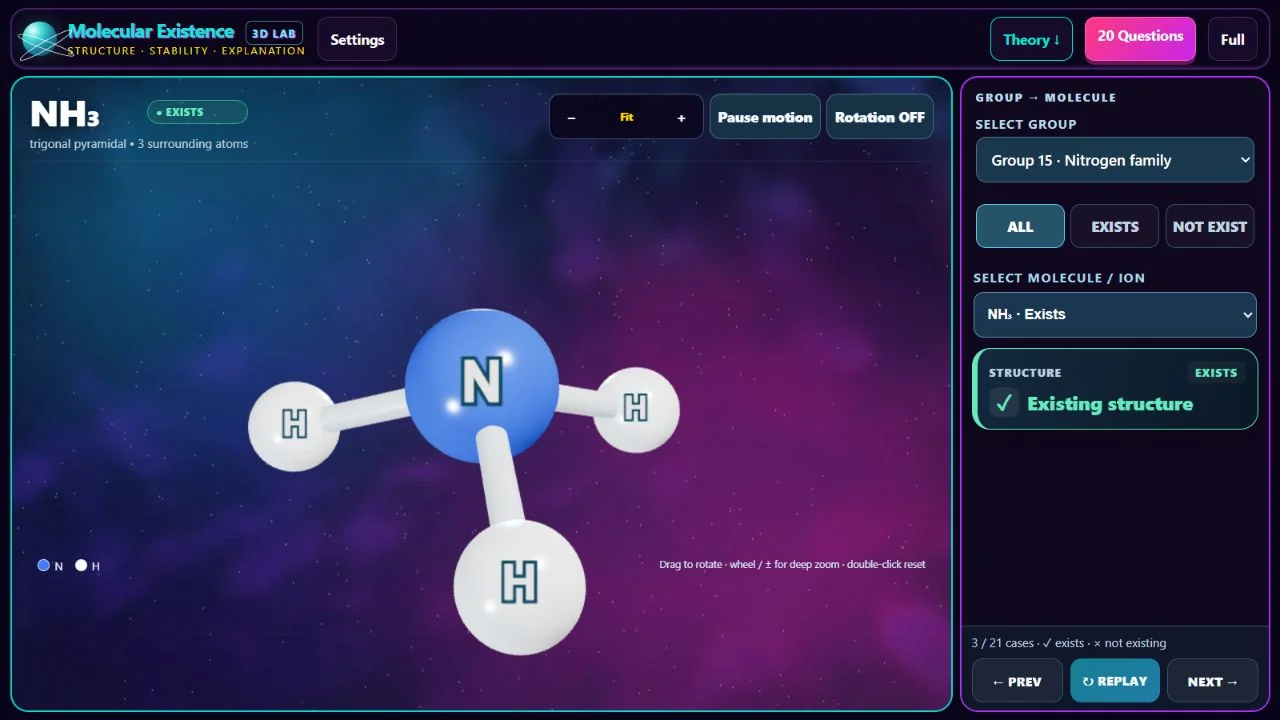
Explore 106 molecule and ion cases by periodic group, then compare their structures, stability, ligand effects and redox behaviour.
 LAB 09Interactive lab
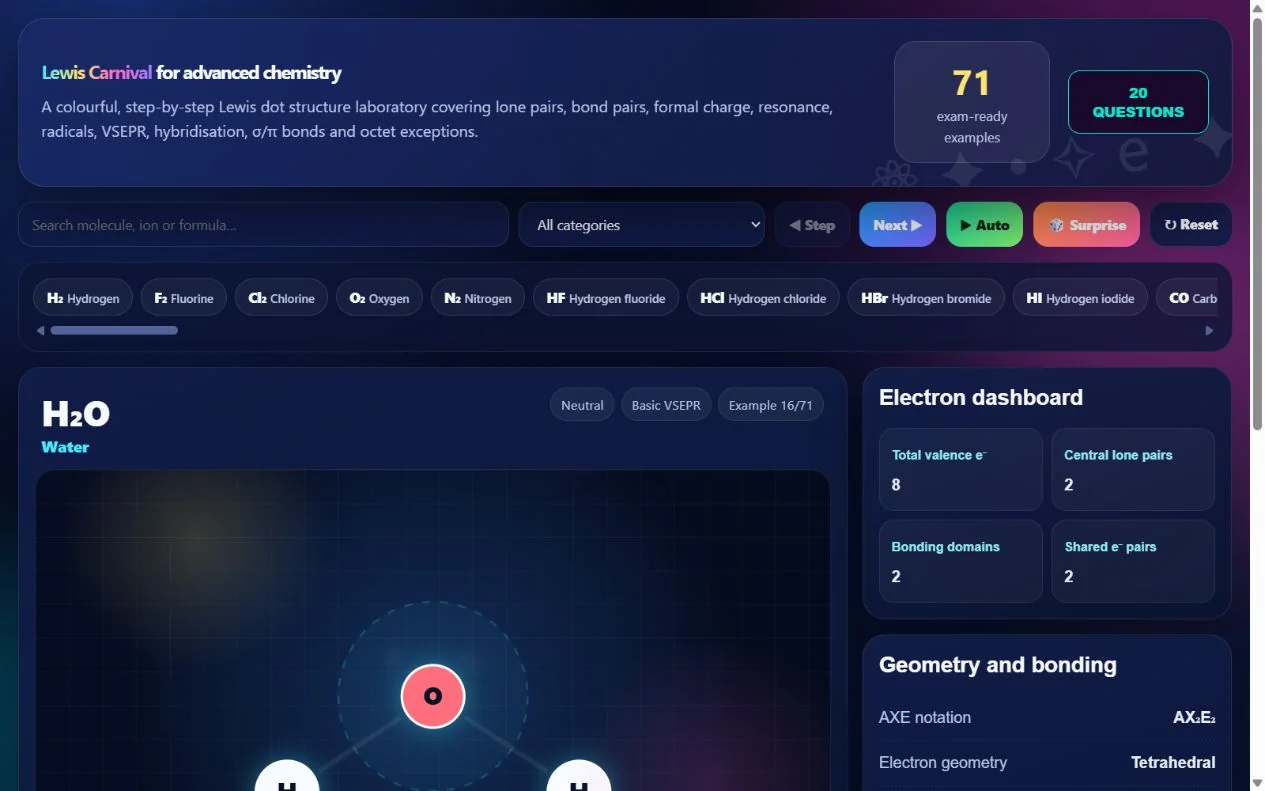
Build Lewis dot structures step by step across molecules and ions while tracking valence electrons, formal charge, resonance, geometry and σ/π bonding.
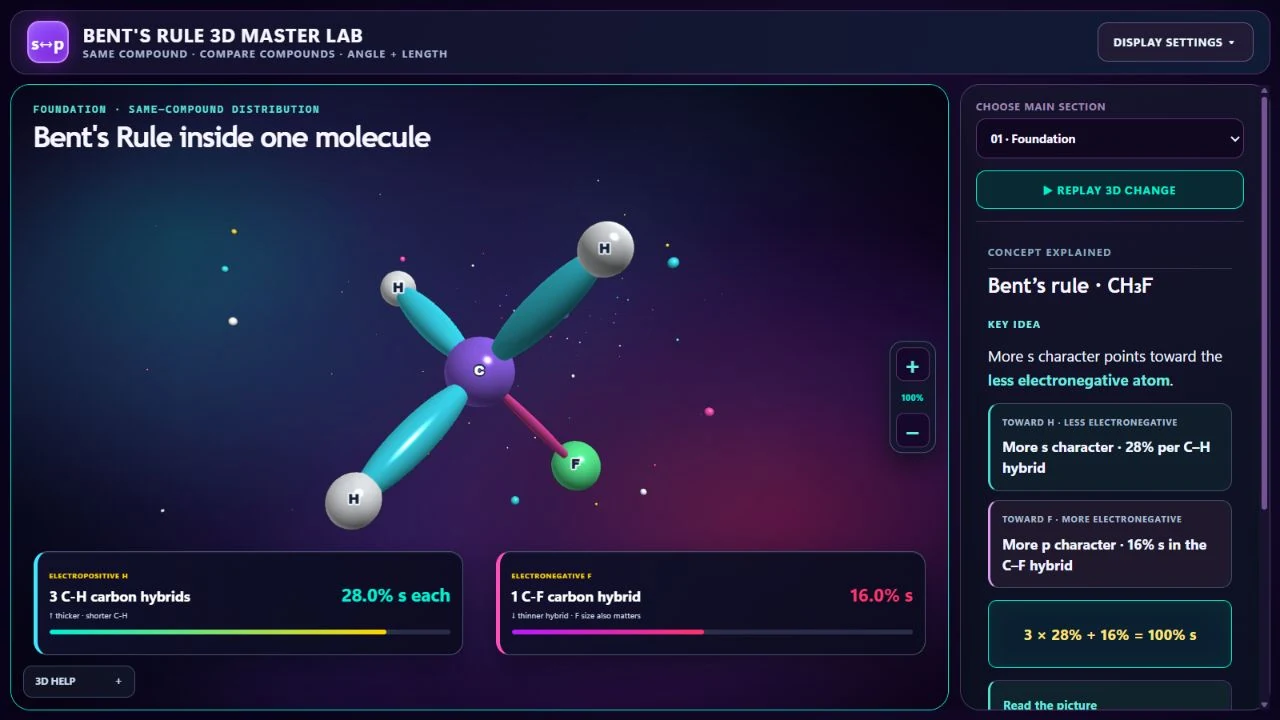 LAB 10Interactive lab
See how central-atom s and p character redistribute between bonds, then connect hybrid character with angles, placement and bond length.
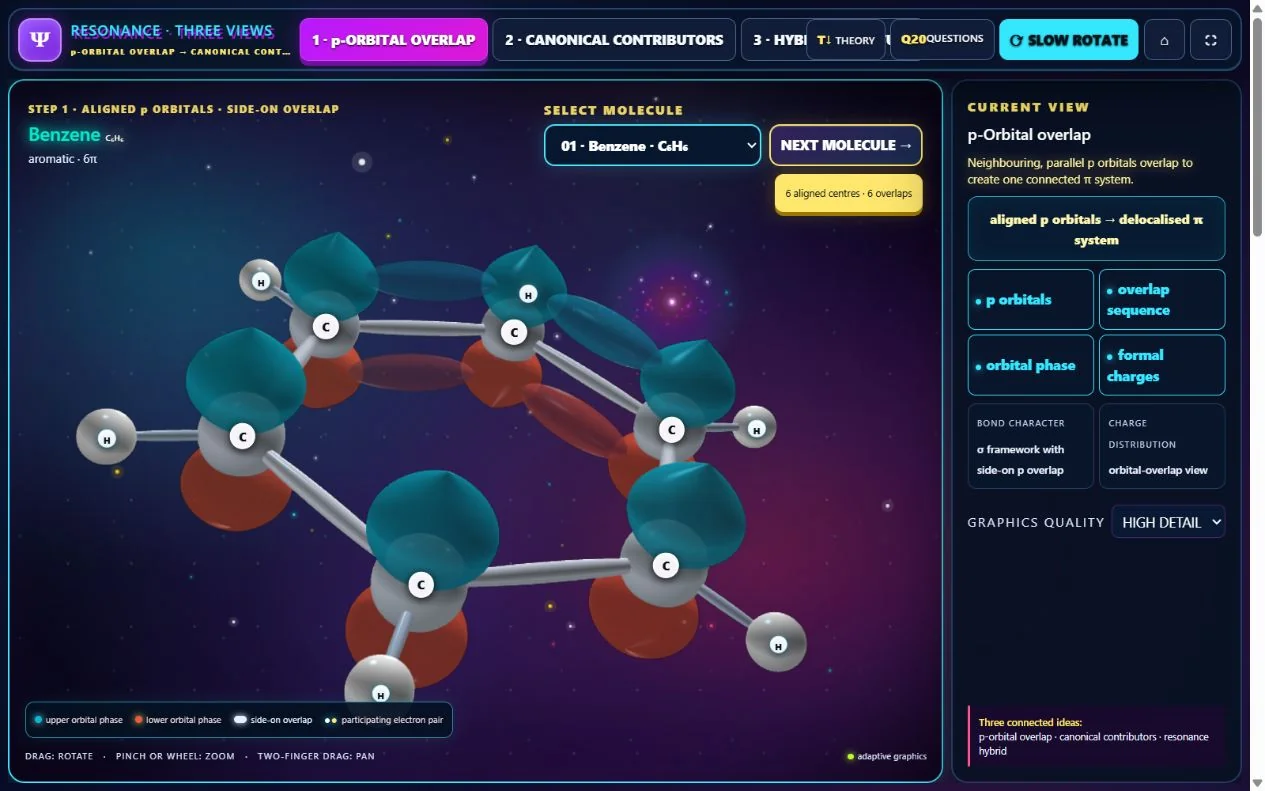 LAB 11Interactive lab
Connect aligned p-orbital overlap with imaginary canonical contributors and the real resonance hybrid across 23 important conjugated systems.
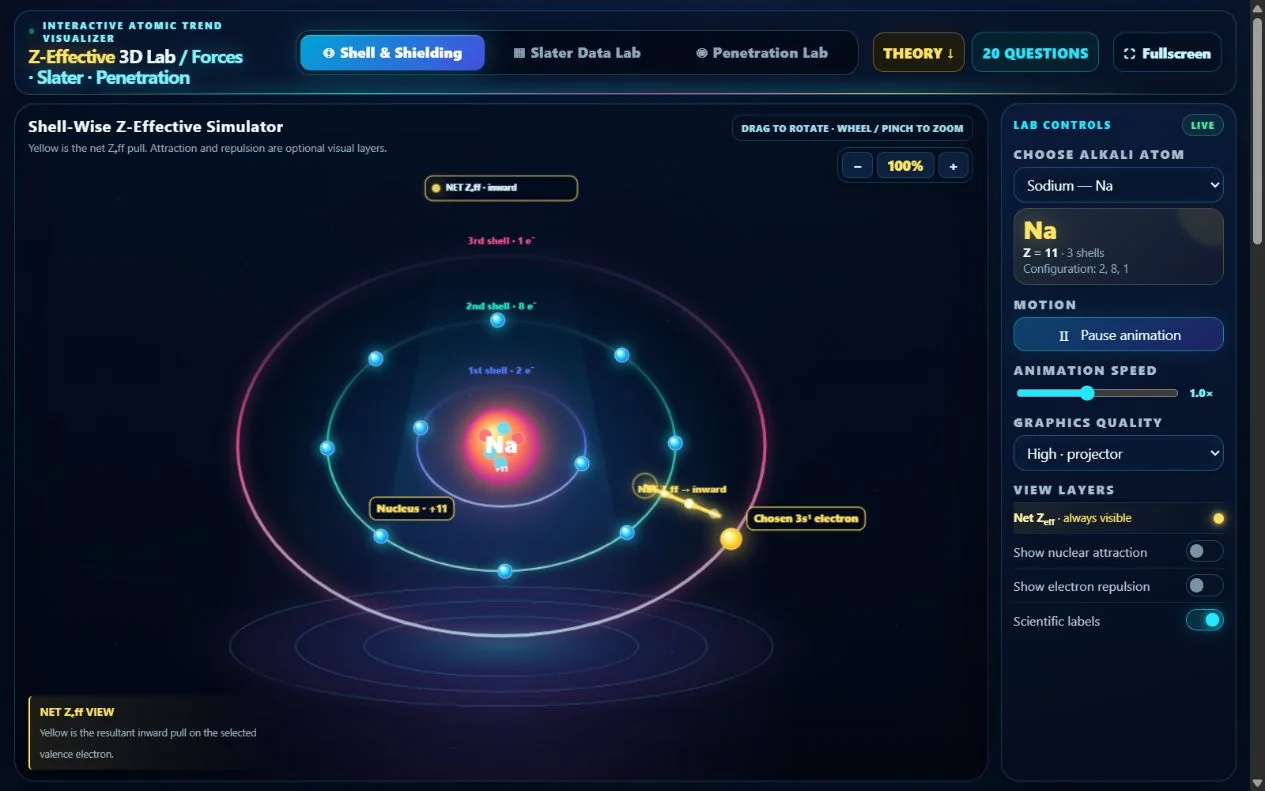 LAB 12Interactive lab
Visualise effective nuclear charge as nuclear attraction minus shielding, apply Slater's rules across Period 2 and Group 1, and compare s, p, d and f penetration.
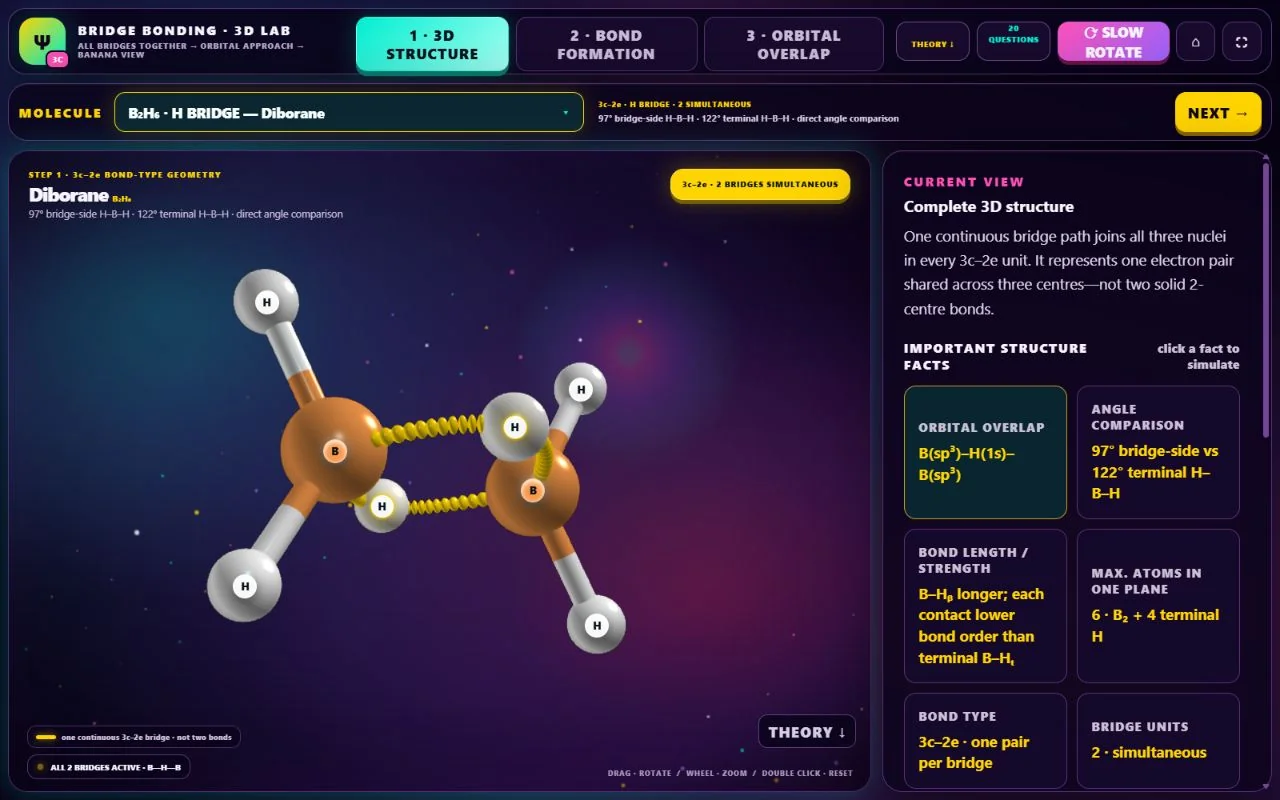 LAB 13Interactive lab
Explore bridge and banana bonding from foundation to advanced level through rotatable 3D models of B₂H₆, Be₂H₄, Al₂Cl₆, Be₂Cl₄, polymeric BeCl₂, I₂Cl₆ and Al₂(CH₃)₆.
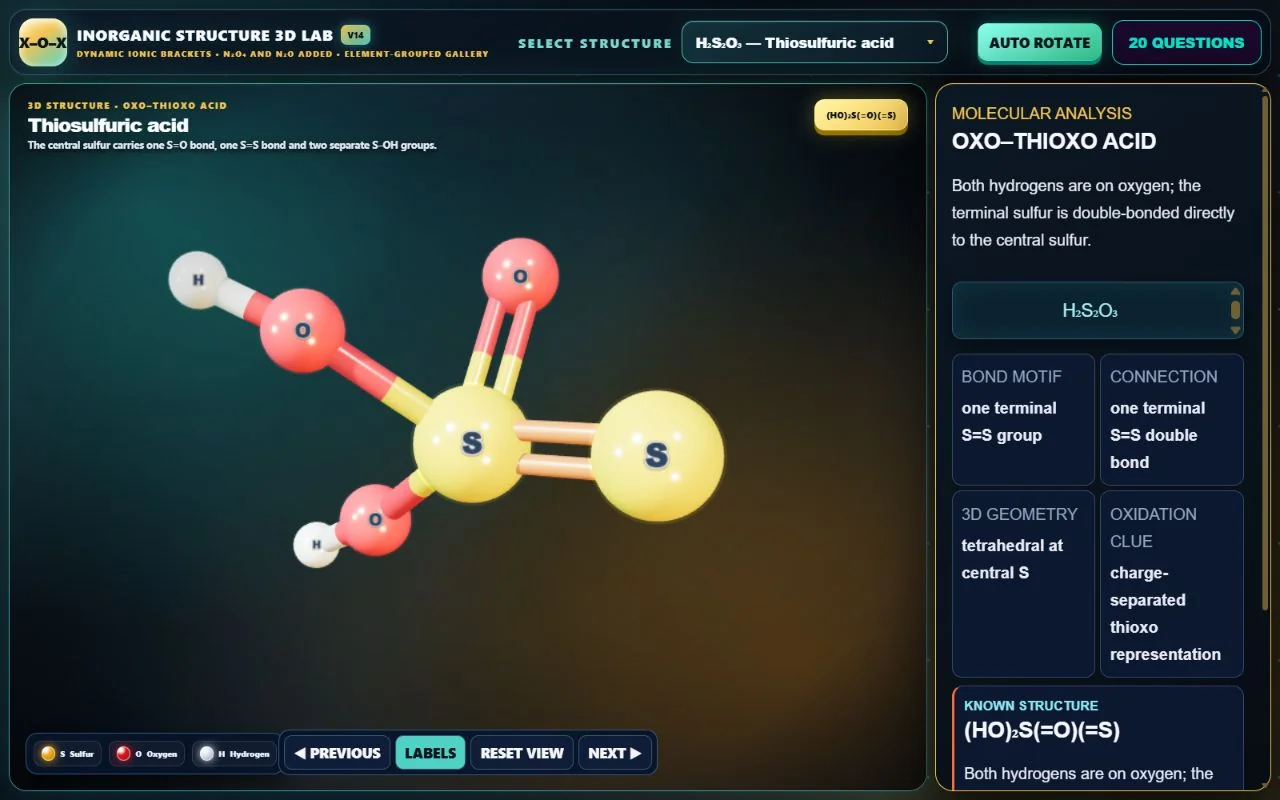 LAB 14Interactive lab
Explore 49 rotatable inorganic structures organised by central element, including oxides, oxyacids, rings, peroxo species, ionic units and network solids.
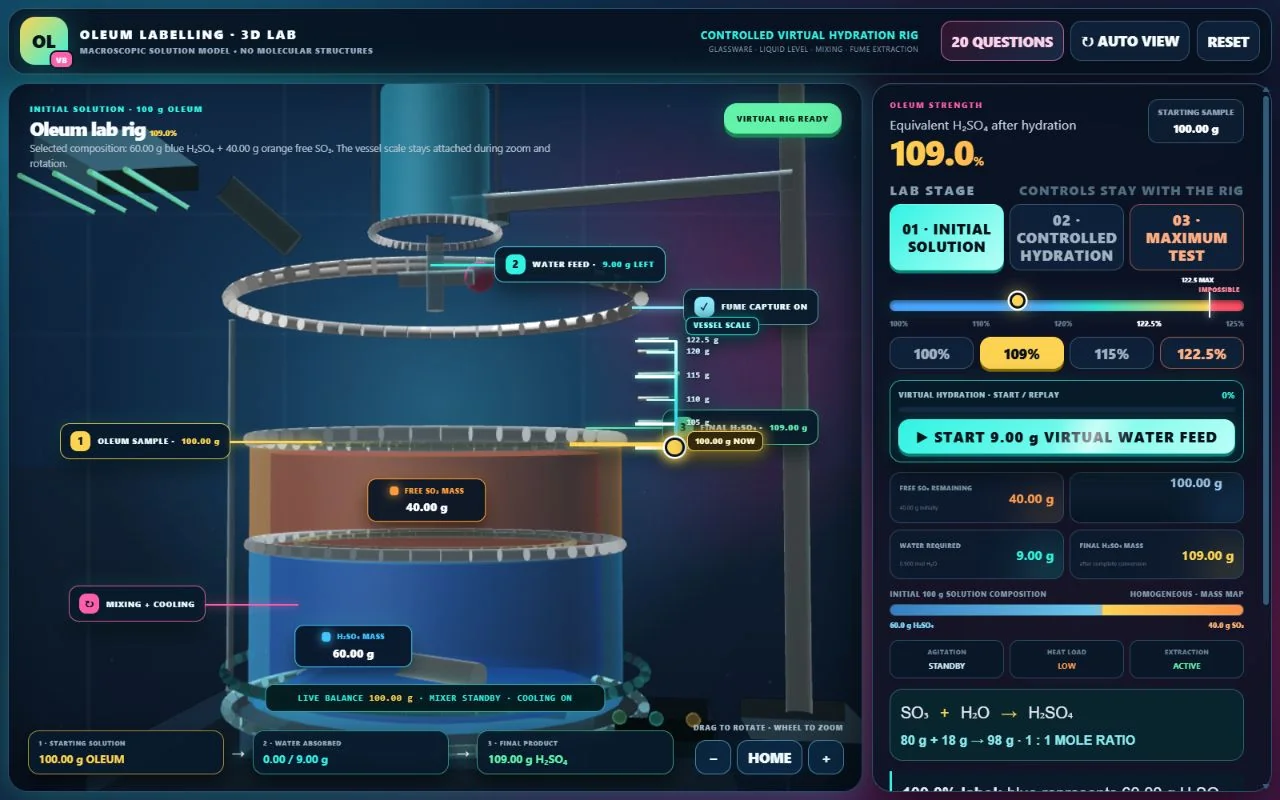 LAB 15Interactive lab
Build the mass balance of oleum in a rotatable 3D laboratory, vary the percentage label from 100 to 122.5, run virtual hydration and practise worked Mole Concept questions.
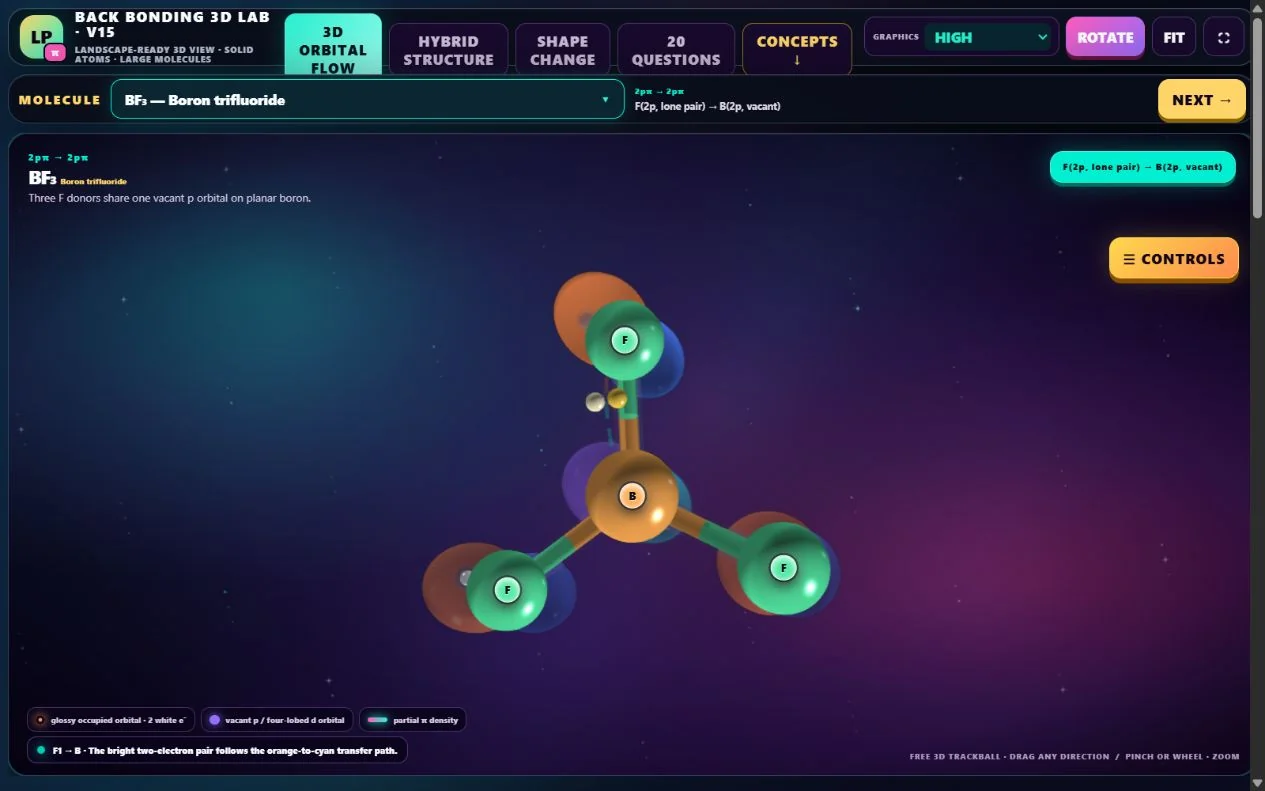 LAB 16Interactive lab
Watch lone-pair donation into a neighbouring vacant orbital, compare 11 back-bonding systems, follow seven shape changes and solve 22 guided challenges.
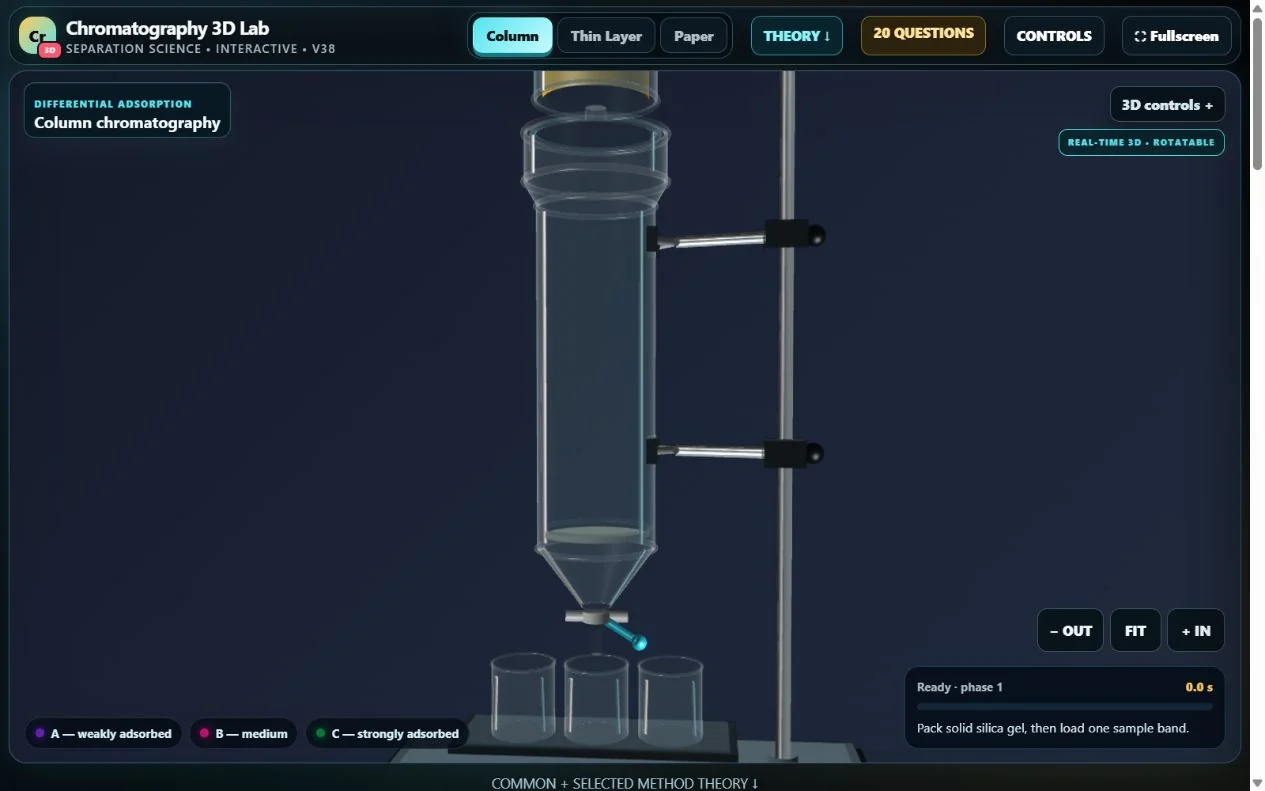 LAB 17Interactive lab
Run column, thin-layer and paper chromatography in 3D, compare stationary and mobile phases, and measure separation with an interactive Rf calculation.
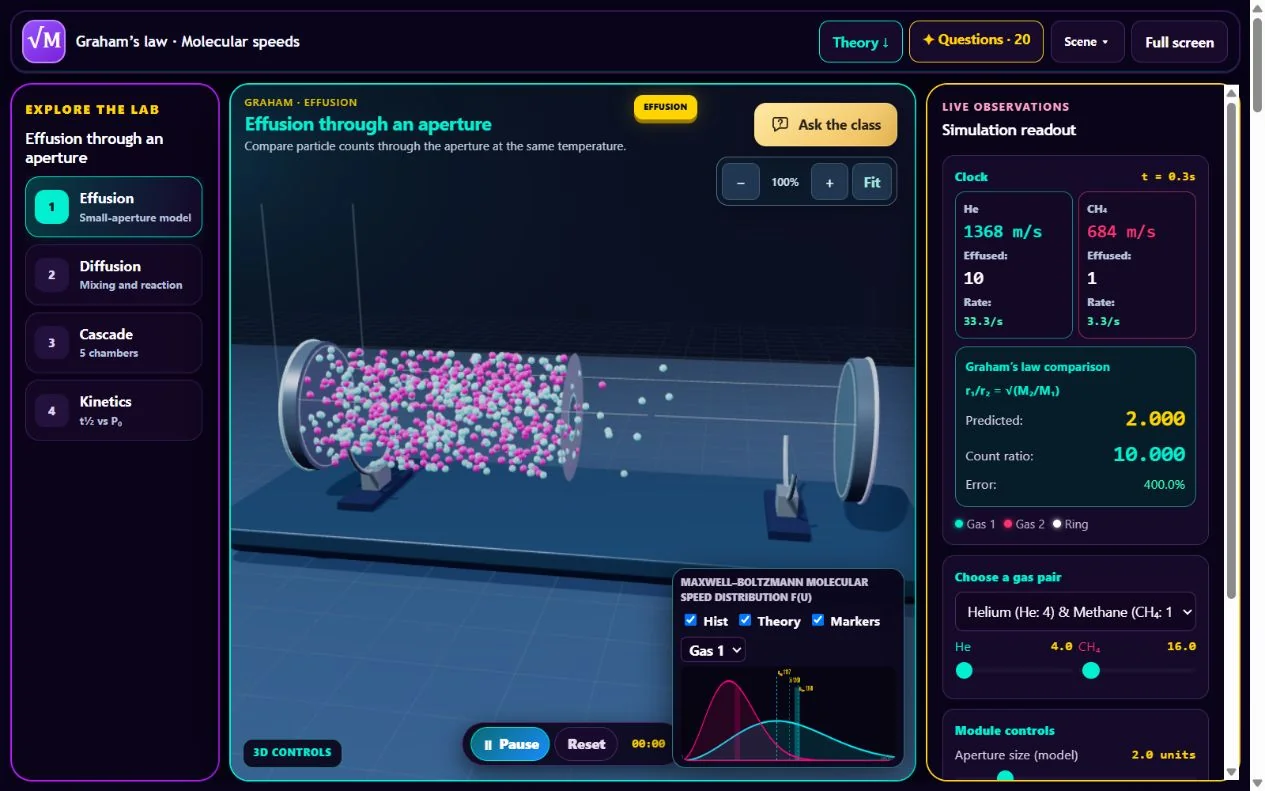 LAB 18Interactive lab
Compare effusion, diffusion and molecular-speed distributions in an interactive gas lab, then connect rate ratios with molar mass and temperature.
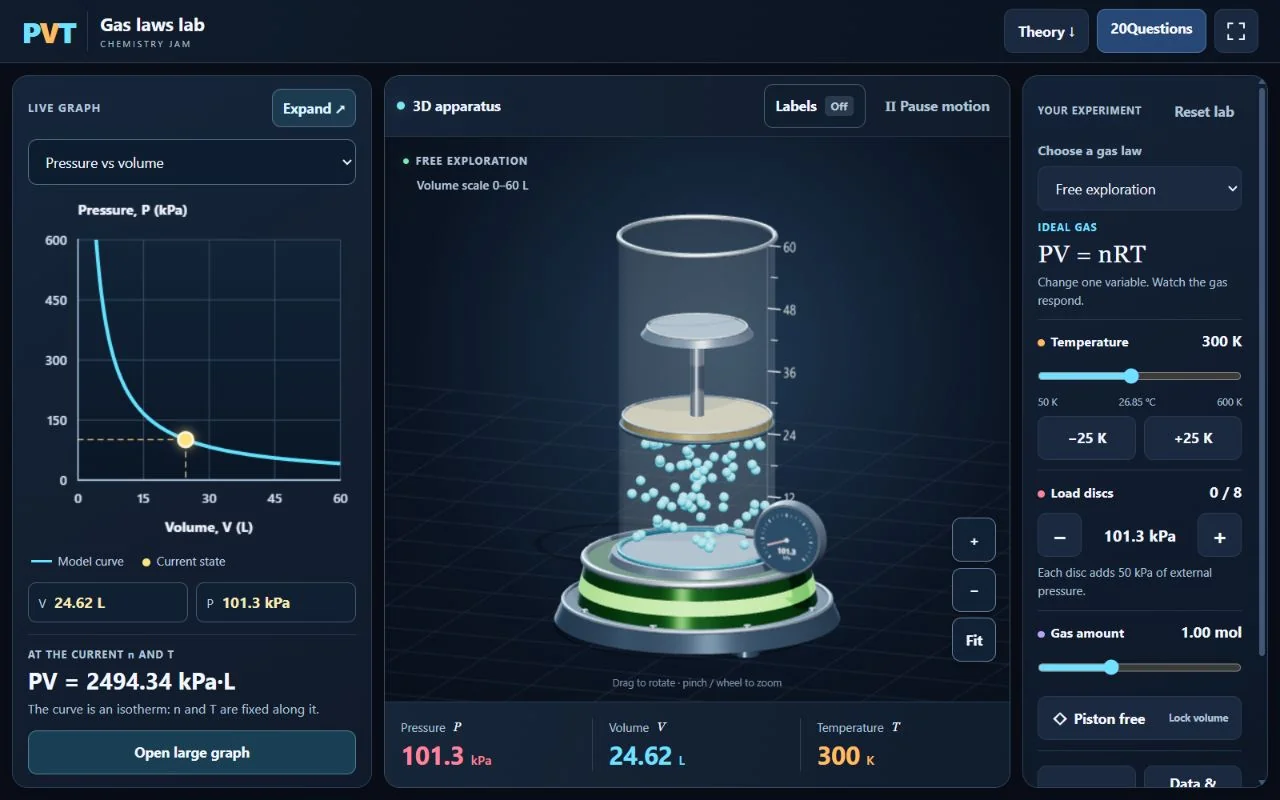 LAB 19Interactive lab
Explore pressure, volume, temperature and amount in a live piston model, trace gas-law curves, collect data and connect macroscopic changes with particle motion.
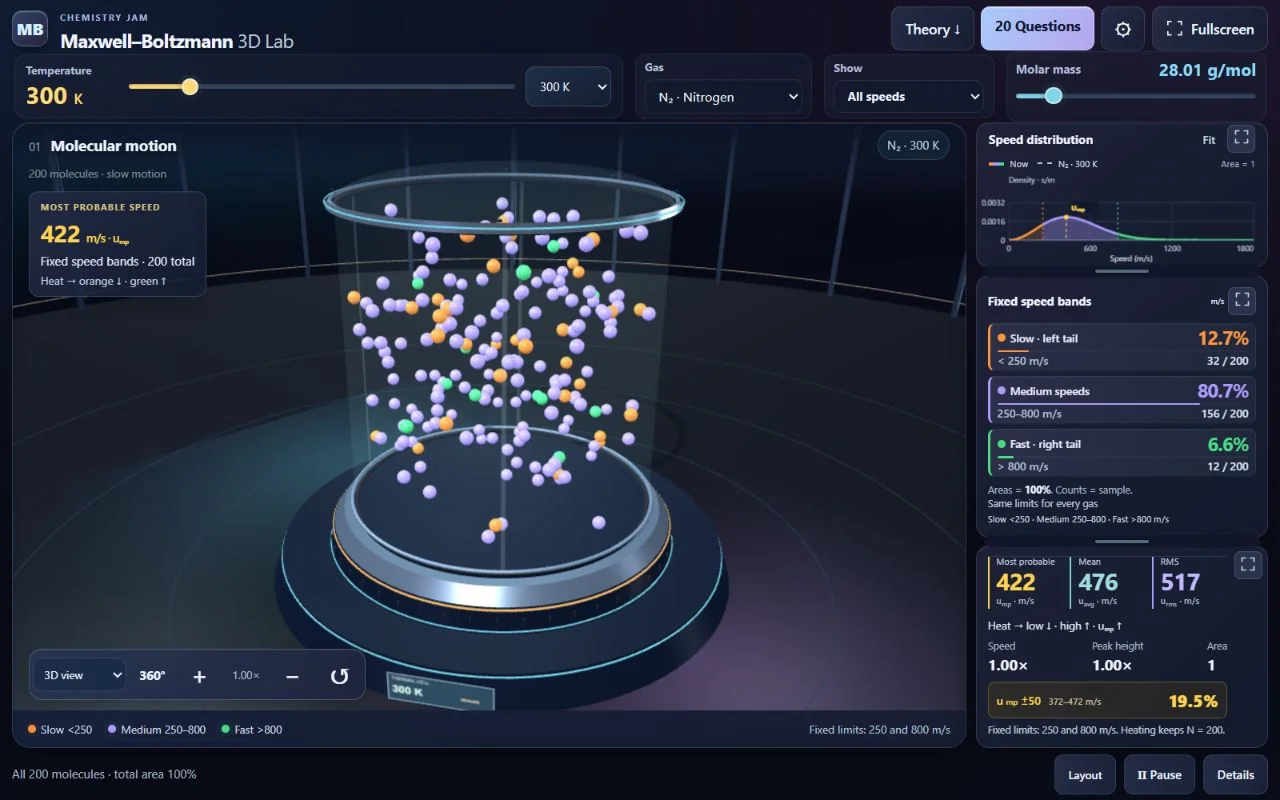 LAB 20Interactive lab
Explore molecular motion and speed distributions in 3D. Change temperature and gas mass, compare fixed speed bands and practise 20 questions with worked solutions.
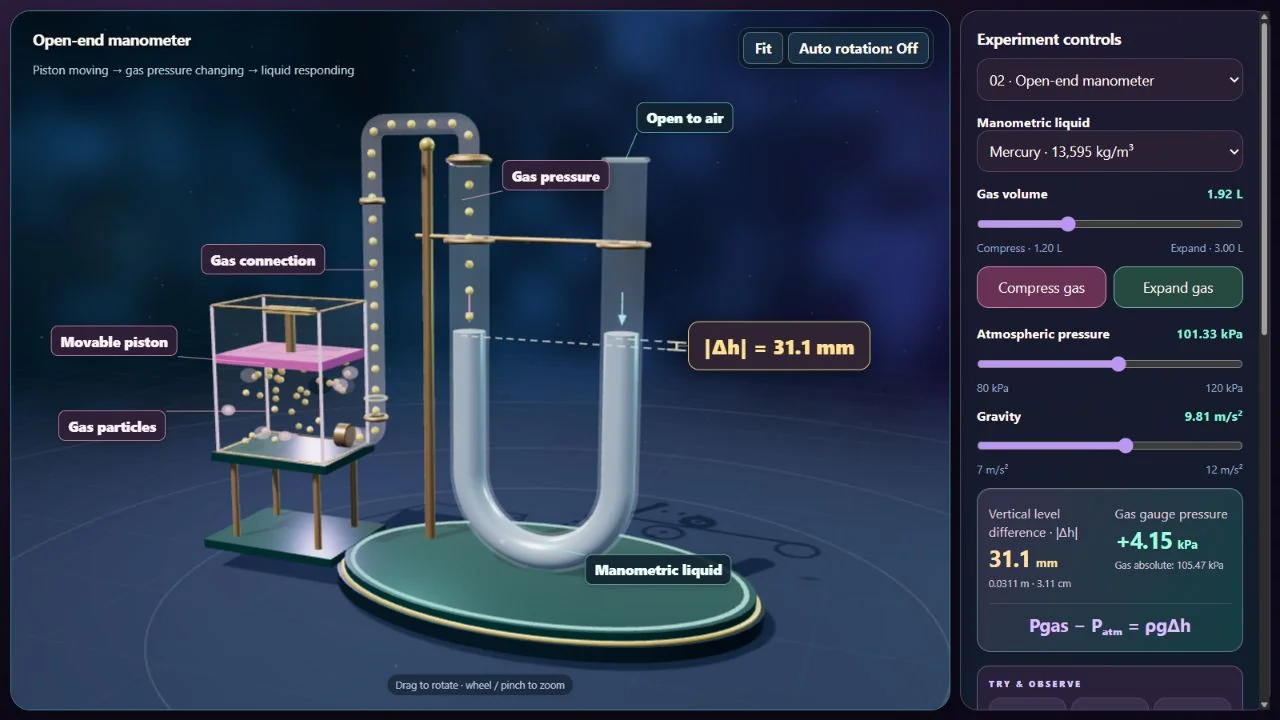 LAB 22Interactive lab
Measure pressure with four 3D apparatus setups. Compare liquid levels, density, gravity and gas compression, then practise 20 questions with worked solutions.
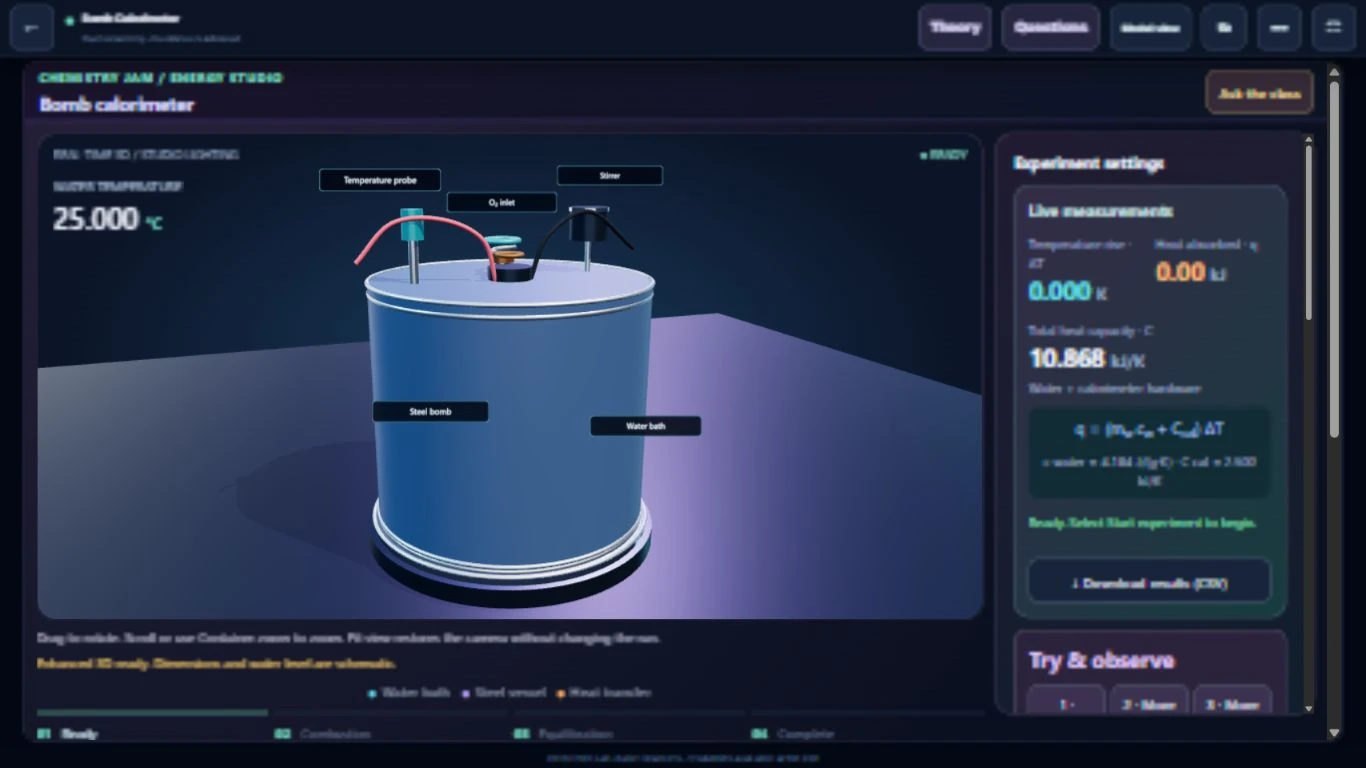 LAB 23Interactive lab
Explore combustion in a 3D calorimeter, compare sample and water masses, and solve 20 questions with worked solutions.
Resonance is now live. Curved-arrow pathways, intermediates and selectivity labs are next.