
Choose the pressure reference
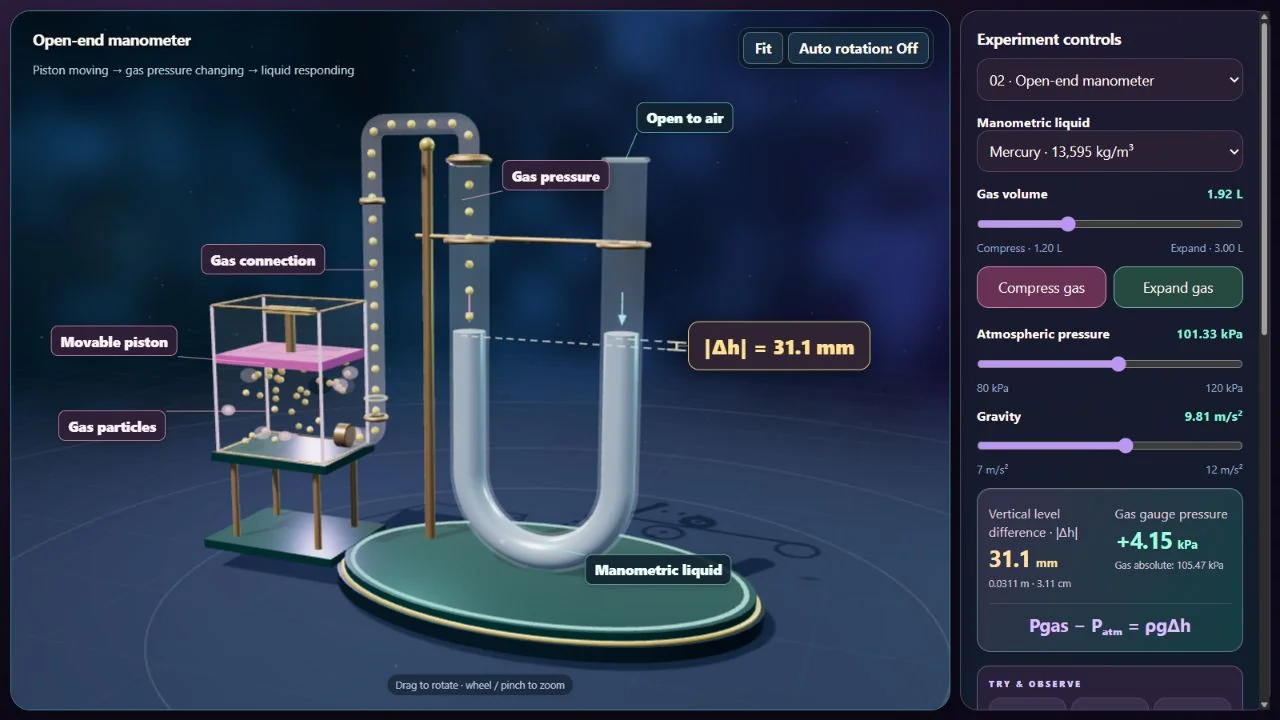
An open manometer compares gas pressure with atmosphere, an evacuated arm gives an approximately zero reference, and a differential instrument compares two gas sources.
Opening your lab guide…
The simulation has closed. Your guide is on its way.
LIVE LAB 22 • STATES OF MATTER & GAS LAWS
Measure pressure with four 3D apparatus setups. Compare liquid levels, density, gravity and gas compression, then practise 20 questions with worked solutions.
Open paid simulation →Purchase this simulation or get all paid labs with a subscription. View prices →
 ACTUAL LAB PREVIEW
QUICK START
COMPLETE CONCEPT GUIDE
A liquid column turns pressure differences into visible height differences. Explore four apparatus types and connect their readings with density, gravity and the ideal-gas equation.
An open manometer compares gas pressure with atmosphere, an evacuated arm gives an approximately zero reference, and a differential instrument compares two gas sources.
The pressure difference is ρgΔh. Use vertical separation, the correct liquid density and a sign based on which surface is higher.
Use absolute pressure in PV = nRT. When vapour is present, subtract its partial pressure before calculating dry-gas amount. Reaction mole ratios explain pressure changes at fixed temperature and volume.
BAROMETER & MANOMETER FAQ
A barometer measures atmospheric pressure. A manometer compares a gas pressure with atmosphere, a vacuum or another gas pressure.
For the same connected liquid at equilibrium, the side with greater applied pressure has the lower liquid surface.
Yes. Negative gauge pressure means pressure below the atmosphere. Absolute pressure remains positive.
RELATED SIMULATIONS
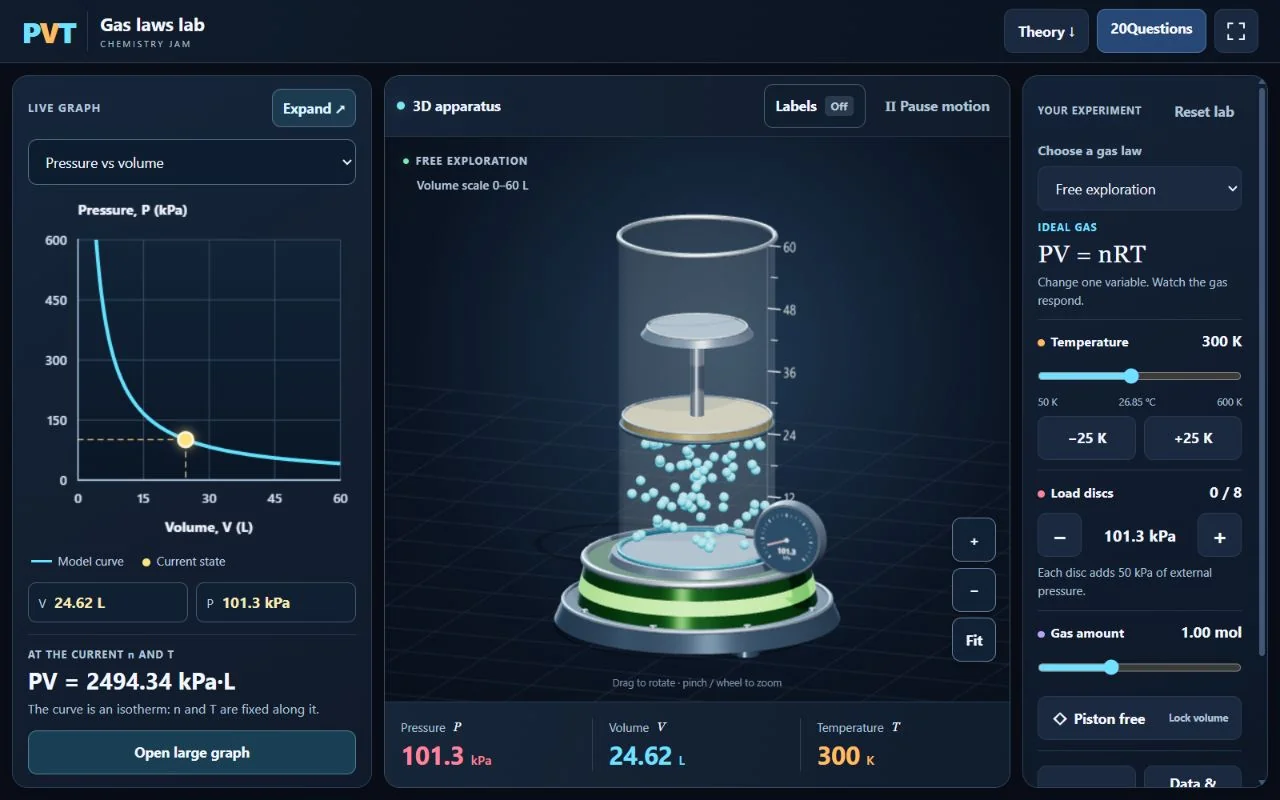 States of Matter & Gas Laws
Explore pressure, volume, temperature and amount in a live piston model, trace gas-law curves, collect data and connect macroscopic changes with particle motion.
Open related lab →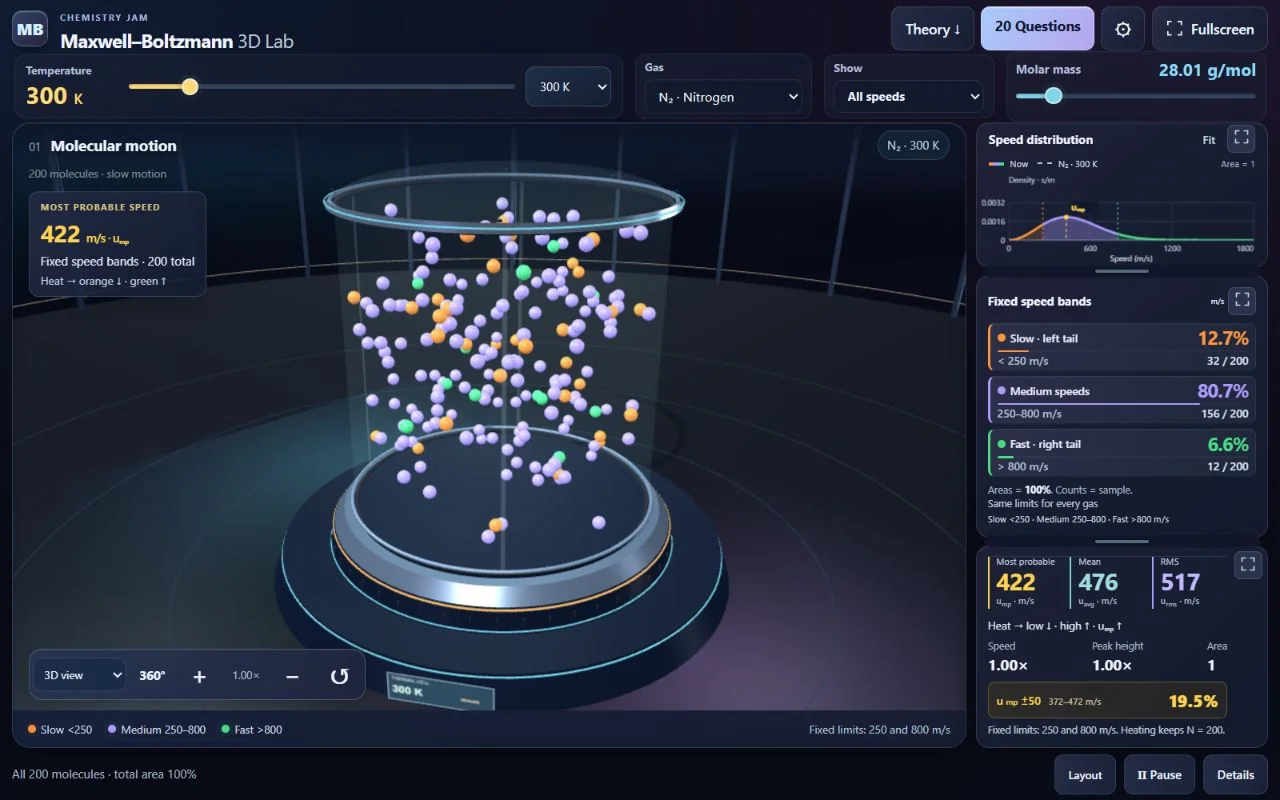 States of Matter & Kinetic Theory
Explore molecular motion and speed distributions in 3D. Change temperature and gas mass, compare fixed speed bands and practise 20 questions with worked solutions.
Open related lab →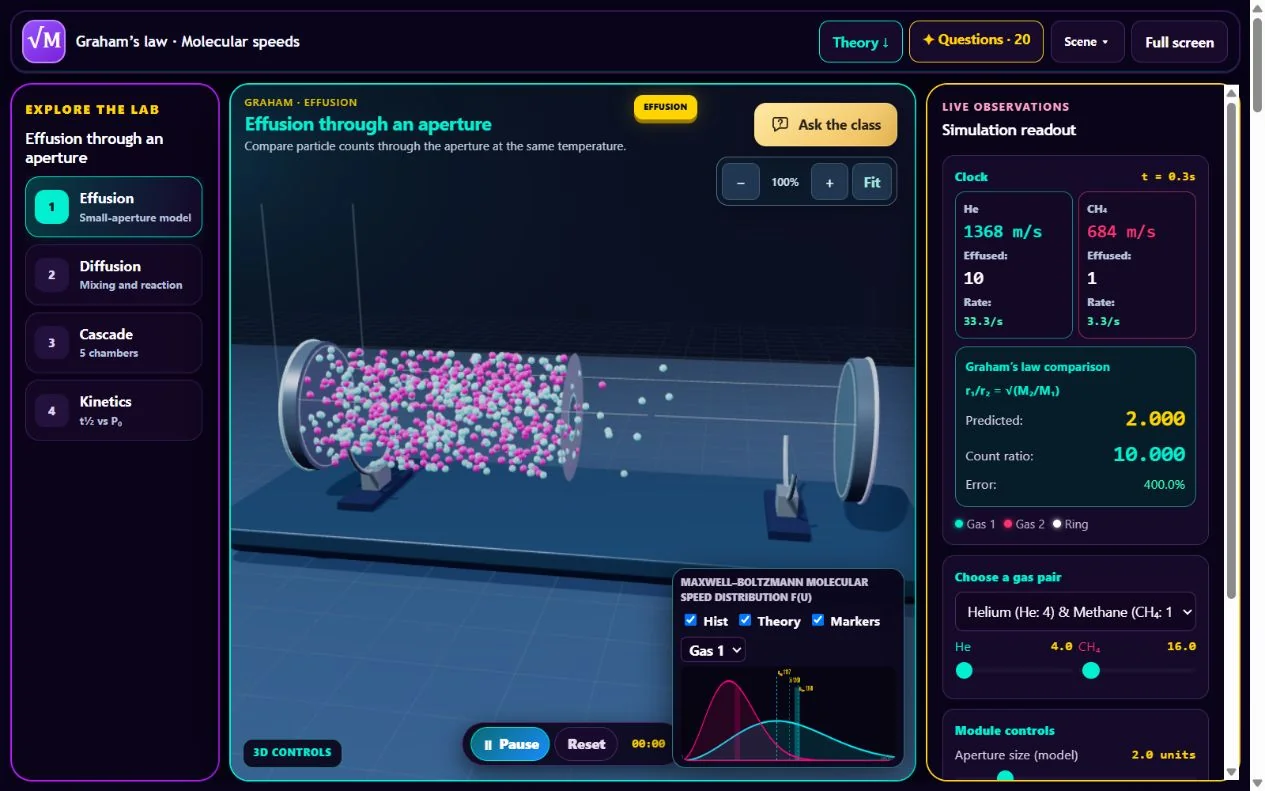 States of Matter & Kinetic Theory
Compare effusion, diffusion and molecular-speed distributions in an interactive gas lab, then connect rate ratios with molar mass and temperature.
Open related lab →Connect this lab with related chemistry topics and choose the depth that fits your current studies.
STUDENT DISCUSSION
Loading discussion…
Comments stay outside the simulation. When you exit the lab, you can choose to share a question or observation.